
Whether you are prepping a site for a new home or expanding a commercial parking lot, clearing the land is the first major step. Here are the most common questions homeowners and businesses ask about the process.
1. Do I need a permit to remove trees on my own property?
In many Indiana jurisdictions, yes. Requirements vary significantly based on local zoning laws, the tree species, and its size. Some cities and towns within our service area protect “heritage trees” or have strict rules for clearing land near wetlands. PE Industries will check with your local planning department or have your excavation team verify permits before work begins.
2. Should I remove the trees before the excavators arrive?
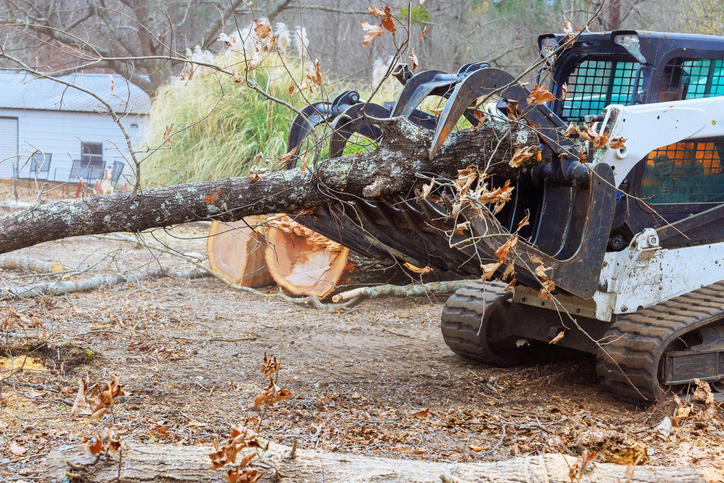
Generally, it is more efficient to let the PE Industries excavation team handle it. We may use heavy machinery like bulldozers and backhoes to pull the tree and the root ball out simultaneously. If you cut the trees down to stumps first, it actually makes the excavation harder and more expensive because the team has to dig out “blind” stumps without the leverage of the trunk.
3. What is the difference between “clearing” and “grubbing”?
- Clearing: This is the removal of all surface vegetation, including trees, bushes, and downed logs.
- Grubbing: This goes deeper, involving the removal of roots and stumps buried in the soil. Grubbing is essential for any area where a foundation or pavement will be laid to prevent future settling or sinkholes.
4. Should I remove the trees before the excavators arrive?
Construction is hard on trees. Heavy machinery can compact the soil around roots, killing the tree years later. We establish a Critical Root Zone (CRZ), usually marked by bright fencing, to ensure no equipment drives over or stores materials near the trees you wish to preserve.
5. How is the debris disposed of?
Depending on local regulations and the scale of the project, we usually handle debris in one of three ways:
- Hauling: Loading debris into trucks and taking it to a green waste facility.
- Chipping: Turning branches and smaller trees into mulch for use later in landscaping.
- Burning: In some rural areas, a “burn pile” is permitted, though this requires specific fire department permits.
6. How much does tree clearing typically cost?
Costs depend on the density of the vegetation, the size of the trees, and site accessibility. Clearing a flat, lightly wooded lot is significantly cheaper than clearing a steep, heavily forested acre. We will provide a written quote after we have assessed your project.